How to Rank in AI Search: The Complete AEO Guide for B2B SaaS (2026)
The definitive guide to AI Engine Optimization (AEO). Learn how to get your B2B SaaS content cited by ChatGPT, Perplexity, Claude, and Google AI Overviews.
How to Rank in AI Search: The Complete AEO Guide for B2B SaaS
Your B2B buyers are changing how they research software. Instead of scrolling through ten blue links on Google, they're asking ChatGPT, "What's the best project management tool for remote teams?" They're typing into Perplexity, "Compare Salesforce alternatives for startups under 50 employees." They're getting instant, synthesized answers from Google AI Overviews before they ever click a single result.
Here's the problem: if your content isn't being cited in those AI-generated answers, you're invisible in a channel that's growing fast. And it is growing. Gartner projects that by the end of 2026, traditional search volume will decline by 25% as AI-powered search interfaces absorb a significant share of informational queries (Gartner, February 2024). Whether or not that specific number lands, the direction is clear — AI search is not a future trend. It's a present reality.
This is why I built a practice around AEO optimization — AI Engine Optimization. AEO is the discipline of structuring, formatting, and positioning your content so that AI models cite it as a source when answering questions relevant to your business. It's not replacing SEO. It's the missing half. And the companies that figure it out first will have a compounding advantage that's difficult to reverse.
This guide is the complete framework. I'll walk you through how AI search actually works across every major platform, what makes an LLM choose to cite one source over another, and the step-by-step methodology I use with B2B SaaS SEO clients to systematically increase their visibility in AI-generated answers. Whether you're a Series A founder trying to figure out this new channel or a VP Marketing evaluating whether AEO deserves budget, this is the resource I wish existed when I started doing this work.
Let's get into it.
25%
Projected decline in traditional search volume by end of 2026
Gartner, Feb 2024
70%
Of SEO fundamentals carry over to AEO — the remaining 30% is structure, schema, and entity optimization
5
Major AI search platforms to optimize for: ChatGPT, Perplexity, Claude, Google AI Overviews, Gemini
AI search platforms at a glance:
| Platform | How it gets content | Citation behavior |
|---|---|---|
| ChatGPT | Training data or real-time web browse (Bing) | Citations only in browsing mode; links to sources |
| Perplexity | Real-time web search across multiple engines | Numbered inline citations on every claim; most AEO-friendly |
| Claude | Training data (web features evolving) | Entity recognition matters; citations as features expand |
| Google AI Overviews | Google index; pulls from top organic results | Cited sources shown above blue links; SEO is the gate |
| Gemini | Google search index | Same as AI Overviews; conversational follow-ups |
How AI Search Works — Platform by Platform
Before you can optimize for AI search, you need to understand how each platform actually retrieves, processes, and cites information. They're not all the same. Each has a different architecture, different citation behavior, and different implications for your content strategy.
ChatGPT
ChatGPT operates in two modes that matter for AEO.
Training data mode. When a user asks a question without triggering web browsing, ChatGPT draws on its training data — a massive corpus of web content, books, and other text sources ingested during model training. If your content was authoritative, well-structured, and widely referenced at the time of training, it may appear in ChatGPT's answers. But you won't get a citation link — the model treats its training data as internalized knowledge, not sourced content.
Browsing mode. When ChatGPT detects that a query requires current information — or when a user explicitly asks it to search the web — it triggers a browsing tool that fetches and reads web pages in real time. In this mode, ChatGPT provides inline citations with links to the sources it referenced. This is the mode where AEO optimization has the most direct, measurable impact.
What makes ChatGPT cite your page in browsing mode? It searches the web (using Bing's index primarily), reads the top results, and synthesizes an answer. If your page appears in those search results and contains a clear, direct answer to the user's question, you have a strong chance of being cited. This means traditional SEO and AEO share a common foundation — you need to rank in web search to even be considered.
Perplexity
Perplexity is the most citation-friendly AI search platform, and understanding its architecture is critical for AEO.
When a user submits a query, Perplexity performs a real-time web search across multiple search engines and indexes. It retrieves several sources, reads them, and synthesizes an answer with numbered inline citations. Every factual claim in a Perplexity answer is attributed to a specific source with a clickable link.
This makes Perplexity the highest-value target for AEO optimization. The citation behavior is consistent and transparent — you can see exactly which sources are being cited and why. In my experience, Perplexity tends to favor:
- Pages that rank well in traditional search (it pulls from search engine results)
- Content with clear, structured answers — especially numbered lists and direct definitions
- Recent content with visible publication dates
- Pages from domains with established authority in the topic area
Perplexity also has a "Sources" panel that users can expand, giving your brand visibility even when you're not the primary cited source.
Claude
Claude (the AI model from Anthropic) primarily draws from its training data when answering questions. It doesn't currently browse the web by default in the same way ChatGPT does, though this is evolving.
For AEO purposes, Claude matters for two reasons. First, your content's presence in Claude's training data affects how the model discusses your brand, your methodology, and your category. Second, as Claude's web-connected features expand, the same principles that work for ChatGPT browsing will apply.
The key insight for Claude: entity recognition matters enormously. If your brand, your frameworks, and your author identity are consistently represented across the web — in articles, in schema markup, in third-party mentions — Claude is more likely to reference you accurately. Inconsistent or sparse entity signals lead to hallucination or omission.
Google AI Overviews
Google AI Overviews (formerly known as SGE, Search Generative Experience) appear directly in Google search results, above the traditional organic listings. When Google determines that a query benefits from an AI-synthesized answer, it generates an overview that pulls from multiple indexed pages.
This is where AEO and traditional SEO converge most directly. Google AI Overviews pull almost exclusively from pages that already rank in Google's top results. If you're not ranking organically, you're unlikely to appear in an AI Overview.
What makes Google's AI Overview cite your specific page? Based on my analysis of hundreds of AI Overview results across B2B SaaS queries, these patterns emerge:
- Pages with direct, definition-style answers get cited more than pages that bury the answer in context
- Structured content — tables, numbered lists, comparison formats — appears in AI Overviews at a disproportionately high rate
- Pages with strong E-E-A-T signals (experience, expertise, authoritativeness, trustworthiness) are favored, especially for YMYL-adjacent topics
- Recent content with datePublished markup gets preference over outdated pages
Gemini
Google's Gemini is the AI model powering both Google AI Overviews and the standalone Gemini chat interface. When users interact with Gemini directly (at gemini.google.com), the behavior is similar to Google AI Overviews but with a conversational interface.
Gemini draws from Google's search index, so the optimization principles are the same: rank in Google, structure your content for extraction, and ensure your entity signals are strong. The main difference is that Gemini's conversational mode allows for follow-up questions, meaning your content needs to cover topics comprehensively enough to remain relevant across a multi-turn conversation.
The Fundamental Shift
Here's the key difference that makes AEO a distinct discipline from SEO.
Traditional SEO optimizes for ranking in a list. You want position 1 (or positions 1 through 3) in a set of ten blue links. The user sees your title and meta description, clicks through, and lands on your page. You control the experience from that point.
AEO optimizes for being the source an AI cites when it constructs an answer. The user may never visit your page. Your content's value is extracted and presented within the AI's response, with a citation link that some percentage of users will click.
Both matter. SEO drives direct traffic. AEO drives brand authority, citation traffic, and — critically — shapes how AI models talk about your brand and category to millions of users. The companies winning right now are optimizing for both simultaneously.
“Optimizes for ranking in a list of ten blue links. Users see your title and meta description, click through, and land on your page. You control the experience from that point. Success measured by rankings, traffic, and clicks.”
“Optimizes for being the source an AI cites when constructing an answer. Your content is extracted and presented within the AI response, with a citation link. Success measured by citation frequency, accuracy, and brand authority across AI platforms.”
What Makes an LLM Cite Your Content
This is the core of AEO — understanding what signals cause an AI model to select your content as a citation source over all the alternatives it could choose. After months of testing, auditing, and tracking citations across platforms, I've identified six factors that consistently determine whether your content gets cited.
Original Research and Data
LLMs are trained on (and search through) millions of pages. Most of those pages say the same things in slightly different ways. When an LLM constructs an answer, it gravitates toward sources that add something new — a data point, a framework, a finding that doesn't exist elsewhere.
This is why original research is the single highest-leverage AEO asset. If your page contains a statistic, a benchmark, or an insight that the LLM can't find on other pages, you become the necessary citation. The model can't attribute that data point to anyone else.
What counts as original research for a B2B SaaS company?
- Internal data analyses: "We analyzed 500 customer onboarding sessions and found that..."
- Survey results: First-party data from your user base or industry
- Benchmark reports: Performance data across your customer cohort
- Original frameworks: Named, structured methodologies (like the 5-step AEO framework I outline later in this guide)
- Case study metrics: Specific, verified results from real engagements
The key word is specific. "Companies that invest in content marketing see higher ROI" is not citable. "B2B SaaS companies publishing 4+ in-depth articles per month see 3.5x more organic pipeline contribution than those publishing 10+ shallow posts" is citable — if it's backed by real data.
Structured Data and Schema Markup
JSON-LD structured data doesn't just help Google understand your page — it helps every AI model that processes your content understand the entities, relationships, and facts on your page.
When you add Article schema with a named author, a publication date, and a publisher entity, you're giving AI models explicit, machine-readable signals about the provenance and recency of your content. When you add FAQPage schema, you're telling the model: "Here are the specific questions this page answers, and here are the answers."
The schema types that matter most for AEO:
| Schema Type | What It Signals | AEO Impact |
|---|---|---|
| Article | Content type, author, date, publisher | Establishes content as a citable source with clear attribution |
| FAQPage | Question-answer pairs | Directly maps to how users query AI models |
| Organization | Brand entity, contact, social profiles | Builds entity recognition across AI platforms |
| Person | Author identity, credentials, affiliations | Strengthens E-E-A-T signals for citation preference |
| DefinedTerm | Term definitions | Makes definitions extractable for glossary-style AI answers |
| HowTo | Step-by-step processes | Maps to procedural queries in AI search |
| Service | Service offerings, provider, area served | Helps AI models understand what you offer and to whom |
I implement all of these on every client site I work with. The compound effect of strong schema markup is significant — it's one of the few technical optimizations that directly improves both Google rankings and AI citation probability.
Comprehensive, Authoritative Answers
LLMs cite pages that provide complete, definitive answers to questions. Thin content — 300-word blog posts that skim the surface of a topic — almost never gets cited. The model has better options.
What does "comprehensive" look like in practice?
- It answers the primary question completely. If your page is about "how to choose a B2B SEO agency," it needs to actually walk the reader through the evaluation process — not just list five agency names.
- It anticipates follow-up questions. A comprehensive page on AEO doesn't just define AEO — it explains how it works, why it matters, how to implement it, how to measure it, and how it relates to SEO.
- It goes deeper than competing pages. If the top 5 results for a query each cover 4 subtopics, your page needs to cover 6 — and cover them better.
This is why pillar content — long-form, definitive guides — is the most effective content format for AEO. Not because length itself matters, but because length is a byproduct of genuine comprehensiveness.
Entity Recognition
AI models don't just process text — they build internal representations of entities. An "entity" in this context is a person, company, product, or concept that the model recognizes as a distinct thing with known attributes.
When I audit a site for AEO readiness, the first thing I check is entity recognition. I search for the company name in ChatGPT, Perplexity, and Claude. I look at what each model knows (or thinks it knows) about the brand. The results are often revealing — and sometimes alarming.
Building entity recognition requires:
- Consistent naming across your site, social profiles, third-party mentions, and schema markup. If your company is called "Acme" on your website but "Acme Inc." in your schema and "ACME Software" on LinkedIn, you're fragmenting your entity signal.
- Author attribution on all content. Named authors with consistent bios and schema markup build person entities that AI models associate with specific expertise areas.
- Topical authority through content depth. Publishing 20 interconnected pages on B2B SaaS SEO tells AI models that you're an authority on B2B SaaS SEO. Publishing one page on SEO, one on social media, one on email marketing, and one on web design tells them nothing.
- Third-party mentions from authoritative sources. When other sites reference your brand, your frameworks, or your author by name, it reinforces entity signals in training data.
Content Freshness
AI models — especially those with web browsing capabilities — show a clear preference for recent content. This makes sense: users asking AI for recommendations or strategies expect current information, not advice from 2019.
Content freshness signals that AI models use:
- datePublished and dateModified in schema markup: The most explicit signal. Keep these accurate and update them when you meaningfully revise content.
- References to current events or data: Mentioning "2026" statistics or recent industry developments signals recency.
- Publication date visible on the page: Both users and AI models look for this.
- Last updated indicators: A visible "Last updated: February 2026" line tells the model this content is maintained.
I recommend a content freshness cadence for AEO: review and update your highest-value pages quarterly. Add new data, refresh examples, update dates. This keeps your content eligible for citation by models that filter for recency.
Clear, Extractable Definitions
When an LLM needs to define a term or answer a "what is" question, it looks for sentences that function as standalone definitions. The model wants to extract a clean, quotable statement — not parse through three paragraphs of context to construct one.
This is a writing discipline. For every key term your page introduces, provide a first-sentence definition that an LLM could pull verbatim:
Extractable: "AEO (AI Engine Optimization) is the practice of optimizing digital content to appear as a cited source in AI-generated search results, including responses from ChatGPT, Perplexity, Claude, and Google AI Overviews."
Not extractable: "There's been a lot of discussion lately about how to optimize for AI search. Some people call it AEO, others call it GEO. Whatever you call it, the basic idea is that you want your content to show up when people use AI tools to search for information."
The first version gives the LLM exactly what it needs. The second version requires the model to synthesize a definition from context — and it might choose a different source that makes its job easier.
The AEO Framework — Step by Step
After working with B2B SaaS companies on AI search visibility, I've distilled the process into a five-step methodology. This is the same framework I use when a client comes to me and says, "We need to show up in ChatGPT." It's systematic, repeatable, and designed to produce measurable results.
The 5-Step AEO Framework
Entity Audit
Map your current visibility and accuracy across every major AI platform
Content Structure
Restructure existing content to be parseable and extractable by AI models
Schema Implementation
Add machine-readable JSON-LD signals for entities, content, and relationships
Citation-Worthy Content
Produce original frameworks, data, and definitive guides designed for citation
Cross-Platform Monitoring
Track citations weekly across ChatGPT, Perplexity, Claude, and Google AI Overviews
Step 1: Entity Audit
Before you optimize anything, you need to understand where you stand. An entity audit maps your current visibility — and accuracy — across every major AI platform.
How to run an entity audit:
- Search your brand name in ChatGPT, Perplexity, Claude, and Gemini. Ask: "What is [your company]?" and "What does [your company] do?" Document the responses. Are they accurate? Are they incomplete? Are they completely absent?
- Search your key topics — the problems you solve, the categories you compete in. Ask: "What are the best [your category] tools?" and "How do I [problem you solve]?" Are you being cited? Are your competitors?
- Search your author/founder by name. Do AI models know who you are? Do they associate you with your company and expertise area?
- Check your schema markup on every key page. Is it present? Is it accurate? Does it match your entity signals elsewhere?
- Audit your robots.txt for AI crawler access. Are GPTBot, ClaudeBot, and PerplexityBot allowed to crawl your site?
The output of an entity audit is a baseline — a snapshot of your AI search visibility that you'll measure against as you implement optimizations. Most companies I audit are surprised by how little AI models know about them — or how inaccurate the information is.
Step 2: Content Structure Optimization
Once you know where you stand, the next step is restructuring your existing content to be more parseable by AI models. This doesn't mean rewriting everything — it means reformatting for extraction.
Key restructuring actions:
- Add direct-answer openings to every section. Each H2 section should begin with a clear, one-sentence statement that answers the implied question of the heading.
- Convert long prose into numbered lists where appropriate. Step-by-step processes, ranked items, and sequential frameworks should be formatted as numbered lists, not buried in paragraphs.
- Build comparison tables. Any time you compare two or more options, a table format is more extractable than prose. LLMs cite tabular data at a disproportionately high rate because it's structured, clean, and easy to present in an answer.
- Create standalone definitions for every key term. Even if the term isn't the focus of the page, define it clearly where it first appears.
- Implement clear H2/H3 hierarchy. Your headings should tell the story of the page when read alone. An AI model that scans your heading structure should understand what the page covers without reading the body text.
This step alone — without creating any new content — can significantly increase your citation probability. I've seen pages go from zero AI citations to consistent Perplexity mentions just by restructuring existing content into a more extractable format.
Step 3: Schema Implementation
Schema markup is the technical foundation of AEO. It's how you give AI models explicit, machine-readable signals about who you are, what you do, and what your content covers.
The schema stack I implement for every B2B SaaS site:
- Organization schema on the homepage: company name, description, URL, logo, social profiles, contact information. This builds the foundational entity signal.
- Person schema for every named author: name, job title, affiliation, social profiles, image. This connects content to a recognized person entity.
- Article schema on every blog post and content page: headline, author, datePublished, dateModified, publisher, description. This tells AI models the content is a published, attributed, timestamped article.
- FAQPage schema on any page with FAQ content: question-answer pairs in machine-readable format. This directly maps to how users query AI models.
- Service schema on service pages: service type, provider, area served, description. This helps AI models understand your offering.
- DefinedTerm schema on glossary pages: the term, its definition, and the source. This makes your definitions the preferred extraction target for "what is" queries.
Example Article schema for a blog post:
{
  "@context": "https://schema.org",
  "@type": "Article",
  "headline": "How to Rank in AI Search: The Complete AEO Guide",
  "author": {
    "@type": "Person",
    "name": "Ankur Shrestha",
    "url": "https://xeo.works"
  },
  "datePublished": "2026-02-12",
  "dateModified": "2026-02-12",
  "publisher": {
    "@type": "Organization",
    "name": "xeo.works",
    "url": "https://xeo.works"
  },
  "description": "The definitive guide to AEO for B2B SaaS companies."
}
Schema implementation is not a one-time project — it's an ongoing practice. Every new page gets schema. Every content update triggers a dateModified update. Every new author gets a Person entity. The compound effect of consistent schema markup across your entire site is what builds the kind of entity recognition that AI models rely on.
Step 4: Citation-Worthy Content Creation
With your existing content restructured and your schema in place, the next step is producing new content specifically designed to be cited by AI models.
What makes content citation-worthy?
It's not about length or production value. It's about providing something that AI models can't get from other sources. That means:
- Original frameworks with names. "The 5-Step AEO Framework" is citable. "Some tips for AI search optimization" is not. Named frameworks give LLMs a specific, attributable concept to reference.
- Definitive guides on topics where no single resource covers everything. If the best existing resource on a topic covers 60% of what a user needs to know, your guide covers 100%. You become the primary citation target.
- Data-backed analyses that include specific numbers. "B2B SaaS companies with structured data markup see 2x more AI citations than those without" is citable — if it's based on real analysis.
- Comparison content that evaluates options objectively. When a user asks an AI model "What's the best X?", the model looks for content that compares options systematically. Lists with clear evaluation criteria outperform biased recommendation posts.
- Expert methodology — sharing the actual process you use to solve a problem. This is where a XEO Content Engine approach shines: producing the kind of deep, structured content that AI models prefer to cite.
What is NOT citation-worthy?
- Rehashed versions of content that already exists on 50 other sites
- Short posts that introduce a topic without going deep
- Content that states opinions without supporting them with evidence or methodology
- Pages optimized for keywords but not for answers
The shift in mindset from "content that ranks" to "content that gets cited" is subtle but important. Ranking requires keyword relevance and authority. Citation requires those things plus originality, structure, and extractability.
Step 5: Cross-Platform Monitoring
AEO is measurable — but the measurement tools are different from traditional SEO. You can't just check Google Search Console and call it a day.
How I monitor AI search visibility:
- Weekly citation checks: Search for your brand, your key topics, and your author name in ChatGPT, Perplexity, and Claude. Document whether you're being cited, the accuracy of citations, and your position in the response (primary source vs. supplementary mention).
- Perplexity tracking: Perplexity's citation format makes it the most trackable platform. Run your target queries weekly and log which pages are being cited.
- Google AI Overview monitoring: Search your target keywords in Google and note when AI Overviews appear and whether your content is cited. Google Search Console is beginning to surface AI Overview impressions for some queries.
- Competitor citation tracking: Don't just monitor your own citations — monitor your competitors'. If a competitor is consistently being cited for a topic you should own, that's an optimization gap.
- Content performance correlation: Track whether pages that get AI citations also see increases in direct traffic, branded search, and referral traffic from AI platforms.
The monitoring cadence matters. AI search results change as models are updated, as new content enters the index, and as user query patterns evolve. Monthly reviews are the minimum; weekly monitoring on high-priority topics is what I recommend for clients in competitive spaces.
I use this five-step framework with every client engagement. It's the same methodology I apply whether I'm working with a Series A fintech startup or a growth-stage developer tools company. If you want me to run this framework on your site, learn more about my AI Engine Optimization services.
Technical Requirements for AEO
The content and strategy layers of AEO are important, but they sit on top of a technical foundation. If your site fails these technical requirements, even the best content won't get cited.
Schema Markup Types and When to Use Each
I covered the core schema types in Step 3, but here's the decision framework for which types to implement on which pages:
| Page Type | Required Schema | Optional Schema |
|---|---|---|
| Homepage | Organization | WebSite, SiteNavigationElement |
| Service pages | Service, Organization | FAQPage, Offer |
| Blog posts | Article, Person (author) | FAQPage, HowTo |
| Glossary pages | DefinedTerm, Article | BreadcrumbList |
| About page | Person, Organization | — |
| Listicle pages | Article, ItemList | FAQPage |
Validation: After implementing schema, validate it using Google's Rich Results Test and Schema.org's validator. Invalid schema is worse than no schema — it sends conflicting signals.
Semantic HTML Structure
AI crawlers — including GPTBot, ClaudeBot, and PerplexityBot — parse your page's HTML structure to understand content hierarchy and meaning. Using semantic HTML elements gives these crawlers explicit structural signals.
<article>: Wrap your main content in an article element. This tells crawlers "this is the primary content on this page."<section>: Group related content under section elements with heading tags.<aside>: Use for supplementary content (sidebars, related links, author bios) that isn't part of the main argument.<nav>: Wrap navigation elements so crawlers can distinguish navigation from content.<header>and<footer>: Standard page structure elements that help crawlers focus on body content.
Semantic HTML isn't new — it's been an SEO best practice for years. But it takes on additional importance in AEO because AI crawlers use these signals to determine what to extract and what to ignore.
Robots.txt Configuration — Allow ALL AI Crawlers
This is the most common technical AEO mistake I see: companies that block AI crawlers in their robots.txt file.
If GPTBot can't crawl your site, ChatGPT can't cite you in browsing mode. If PerplexityBot is blocked, Perplexity can't include you in its results. It's that simple.
Your robots.txt should explicitly allow these user agents:
User-agent: GPTBot
Allow: /

User-agent: ChatGPT-User
Allow: /

User-agent: ClaudeBot
Allow: /

User-agent: PerplexityBot
Allow: /

User-agent: Google-Extended
Allow: /

User-agent: Googlebot
Allow: /
Some companies block AI crawlers because they're concerned about their content being used for model training. That's a legitimate concern — but blocking these crawlers also prevents your content from being cited in real-time AI search results. You need to decide which matters more for your business. For most B2B SaaS companies, the citation visibility is far more valuable than the training data concern.
Site Speed and Crawlability
AI crawlers, like search engine crawlers, respect crawl budgets and page load times. If your site is slow, crawlers will crawl fewer pages and may time out on long-loading pages.
Technical performance targets for AEO:
- Core Web Vitals all passing (LCP under 2.5s, FID under 100ms, CLS under 0.1)
- Server response time under 200ms
- Clean, crawlable URL structure (no infinite scroll, no JavaScript-rendered-only content)
- XML sitemap that includes all content pages with accurate lastmod dates
- No orphan pages — every page reachable through internal links
Internal Linking Architecture for Topical Authority
Internal linking is a traditional SEO fundamental that takes on additional significance for AEO. AI models use link relationships to understand topical clusters and entity associations.
A strong internal linking architecture for AEO follows a hub-and-spoke model:
- Hub pages — your core service and category pages — sit at the center. Every related page links to these hubs.
- Spoke pages — vertical pages, blog posts, glossary terms — link to the relevant hub and to each other.
- Cross-linking between spokes creates a mesh of topical associations that reinforces your authority on a subject.
For example, this blog post links to the AEO optimization hub page, to related service pages like SEO for B2B SaaS companies and XEO Content Engine, and to vertical pages where AEO applies differently. Each link tells AI models: "These topics are connected, and this site has depth across all of them."
The minimum internal linking target: every page should have at least 5 internal links, with the first link appearing within the first 300 words.
Content Freshness Signals
Beyond the datePublished and dateModified schema I mentioned earlier, there are additional technical freshness signals:
- Sitemap lastmod dates: Keep these accurate. If your sitemap says a page was last modified in 2023 but the content references 2026 data, it creates a conflicting signal.
- HTTP Last-Modified headers: Configure your server to return accurate Last-Modified headers.
- Canonical tags: Ensure canonical tags point to the correct URL. Conflicting canonical signals can prevent AI crawlers from indexing your preferred page version.
Measuring AEO Success
Traditional SEO has mature measurement tools — Google Search Console, Ahrefs, Semrush. AEO measurement is still in its early stages, but there are reliable methods for tracking your AI search visibility.
How to Check If You're Being Cited by ChatGPT
ChatGPT doesn't provide a dashboard for citation tracking. The monitoring is manual but straightforward:
- Search for your brand name in ChatGPT with browsing enabled. Ask "What is [your company]?" and "Tell me about [your company]'s [service]."
- Search for your target topics: "What is the best approach to [problem you solve]?" and "How do I [task your content covers]?"
- Document whether your content appears as a citation, whether the information is accurate, and what competitor content is being cited instead.
Do this weekly for your top 5 topics. Monthly for your full topic portfolio.
Perplexity Citation Tracking
Perplexity's inline citation format makes it the most measurable AI search platform. For every query:
- Note your citation position (source 1, 2, 3, etc.)
- Note whether your citation is in the main answer or in the expanded sources panel
- Track citation consistency — are you cited every time you run the query, or intermittently?
Google AI Overview Monitoring
Google Search Console has begun surfacing some AI Overview data, though coverage is still limited. In the meantime:
- Search your target keywords in Google and visually check for AI Overviews
- Note whether your content appears in the AI Overview, the traditional results, or both
- Track which competitors appear in AI Overviews for your target queries
Metrics to Track
| Metric | What It Measures | Tracking Method |
|---|---|---|
| Citation frequency | How often your content is cited across AI platforms | Weekly manual queries + documentation |
| Citation accuracy | Whether AI models represent your content correctly | Review AI responses against source content |
| Citation positioning | Where your citation appears in the AI response (primary vs. supplementary) | Document position in each response |
| Share of voice | Your citation frequency vs. competitors for key topics | Track competitor citations alongside yours |
| Citation-to-traffic ratio | What percentage of citations drive actual site visits | Compare citation logs with referral traffic from AI platforms |
AEO vs. GEO vs. SEO — Terminology Clarification
The terminology around AI search optimization is still settling. Different practitioners and companies use different terms, and the confusion can make it hard to evaluate strategies and services. Here's how I define and distinguish these terms.
SEO (Search Engine Optimization)
SEO is the practice of optimizing digital content to rank in traditional search engine results — primarily Google, but also Bing, Yahoo, and DuckDuckGo. SEO has been the dominant organic growth channel for over two decades, and its fundamentals — keyword research, content creation, technical optimization, link building — remain essential.
SEO success is measured by organic rankings, organic traffic, and the business outcomes (pipeline, revenue) that traffic drives.
AEO (AI Engine Optimization)
AEO is the practice of optimizing digital content to appear as a cited source in AI-generated search results. This includes ChatGPT, Perplexity, Claude, Google AI Overviews, and Gemini.
AEO shares SEO's foundation — you still need great content, technical excellence, and topical authority. But AEO adds an optimization layer focused on:
- Extractability: Structuring content so AI models can pull clean answers
- Entity recognition: Building your brand as a known entity across AI platforms
- Schema markup: Providing machine-readable signals about your content
- Citation-worthiness: Creating content that AI models need to cite (original research, definitive guides, unique frameworks)
GEO (Generative Engine Optimization)
GEO is a term sometimes used interchangeably with AEO. It was popularized by a 2023 academic paper from researchers at Princeton, Georgia Tech, IIT Delhi, and the Allen Institute for AI that studied how content could be optimized for generative AI search engines (arXiv:2311.09735).
In practice, GEO and AEO describe the same discipline. I use "AEO" because it parallels "SEO" more naturally and emphasizes the optimization aspect rather than the technology. But if you encounter "GEO" in other contexts, it's referring to the same set of practices.
How They Relate
Think of it as layers:
| Layer | What It Optimizes For | Primary Outcome |
|---|---|---|
| SEO | Ranking in search engine results pages | Organic traffic |
| AEO/GEO | Being cited by AI models as a source | Citation visibility, brand authority |
| Content quality | Satisfying user intent completely | Both SEO and AEO outcomes |
The Cross-Engine Optimization Stack
Content Quality Foundation
User intent satisfaction, comprehensiveness, original research, practitioner expertise
SEO Layer
Keywords, rankings, technical optimization, link building, organic traffic
AEO Layer
Extractability, entity recognition, schema markup, citation-worthiness
The relationship is not competitive — it's complementary. The same content quality that ranks in Google is what gets cited by AI. The difference is in the structural optimization. A page can rank #1 in Google but never get cited by ChatGPT if it's poorly structured for extraction. Conversely, a page perfectly structured for AI citation won't get cited if it doesn't rank well enough to appear in the web search results that AI models draw from.
The practical implication: if you're doing SEO well, you're 70% of the way to AEO. The remaining 30% is structure, schema, and entity optimization. That's the gap I help companies close.
Industry-Specific AEO Strategies
AEO principles are universal, but the implementation varies by industry. The content that AI models cite for a fintech question is different from what they cite for a developer tools question — not in structure, but in substance. Here's how AEO applies across the verticals I work with most.
Fintech
Fintech AEO has a compliance dimension that most other industries don't. When an AI model cites a fintech company's content about lending, payments, or investing, the accuracy of that content has regulatory implications.
Fintech AEO priorities:
- Regulatory accuracy: Every claim must be defensible. This isn't just good practice — it's what makes your content trustworthy enough for AI models to cite. LLMs are increasingly cautious about citing financial content that could be inaccurate.
- Compliance-aware schema: Include relevant regulatory disclaimers in your content structure. This doesn't hurt AEO — it actually strengthens E-E-A-T signals.
- Definitional content: Fintech buyers search for definitions of complex financial concepts. Clear, authoritative definitions are AEO gold.
- Comparison content: "Best payment processing platforms" and "Stripe vs. Square" queries are heavily served by AI search. Objective comparison content with clear evaluation criteria gets cited.
For fintech companies specifically, I've mapped the keyword landscape and identified meaningful AEO opportunities in the informational queries that fintech buyers search before they evaluate specific products. Learn more about my approach in fintech SEO.
Developer Tools
Developer tools have a unique AEO advantage: technical documentation is inherently structured, authoritative, and citation-worthy.
Developer tools AEO priorities:
- Documentation as an AEO asset: Your API docs, integration guides, and technical tutorials are the content AI models cite most for developer queries. Invest in documentation quality — it's not a cost center, it's a growth lever.
- Code examples with context: AI models frequently cite pages that include code snippets with clear explanations. The combination of code and prose is more citable than either alone.
- Comparison and migration content: "How to migrate from [competitor] to [your product]" is a high-citation format. Developers ask AI models these questions constantly.
- Community content signals: Developer tools with active communities (Stack Overflow presence, GitHub discussions, blog post references) build stronger entity signals than those without.
Cybersecurity
Cybersecurity AEO is driven by two content types: threat analysis and best practices.
Cybersecurity AEO priorities:
- Thought leadership content: Original analysis of emerging threats, vulnerability disclosures, and security trends. This is the cybersecurity equivalent of original research — it's uniquely citable because no other source has the same analysis.
- Best practice frameworks: Clear, structured security checklists and implementation guides. When a CISO asks ChatGPT "How do I implement zero trust architecture?", the content that gets cited is the one with a clear, step-by-step framework.
- Timeliness: Cybersecurity content has a shorter freshness window than most verticals. Update cadence matters more here — a six-month-old threat analysis is outdated.
- Authority signals: Security certifications, compliance standards (SOC 2, ISO 27001), and industry affiliations serve as E-E-A-T signals that influence citation preference.
Legal Tech
Legal tech AEO shares similarities with fintech — accuracy and regulatory awareness are non-negotiable.
Legal tech AEO priorities:
- Jurisdiction-specific optimization: Legal content that specifies jurisdiction (federal vs. state, US vs. EU) is more citable than generic legal content. AI models need to provide accurate, jurisdiction-appropriate answers.
- Regulatory content: Compliance guides, regulatory summaries, and legal framework explanations are high-citation content types. When a buyer asks "What does GDPR require for data processors?", the page with a clear, structured answer wins the citation.
- Plain-language definitions: Legal terms defined in clear, accessible language (while remaining accurate) serve both AEO and user experience. When an AI model needs to explain "GDPR compliance" to a non-lawyer, it cites the page that explains it clearly — not the one buried in legalese.
- Case law and precedent content: Original analysis of legal developments is citation-worthy in the same way original research is — it provides something AI models can't find elsewhere.
Across all verticals, the pattern is the same: understand what your buyers ask AI models, produce the most authoritative answer to those questions, and structure that answer for extraction. The industry context changes the substance, but the framework stays consistent.
If you're a startup building your first SEO strategy, the AEO layer is worth building in from the beginning rather than retrofitting later.
Tools for AEO Monitoring
The AEO monitoring tool landscape is still emerging. As of early 2026, here's what's available — and what's still missing.
Manual Citation Checks
This is still the gold standard, and I don't see that changing in the near term. The process:
- Maintain a list of 20-30 queries that represent your key topics and brand terms
- Run each query in ChatGPT (with browsing), Perplexity, Claude, and Google (checking for AI Overviews)
- Document: Were you cited? What position? Was the citation accurate? Who else was cited?
- Run this weekly for high-priority terms, monthly for the full list
It takes 2-3 hours per week. The data is invaluable. No automated tool provides this level of granular insight across all platforms.
Google Search Console
Google Search Console remains essential for AEO because it tracks the organic rankings that underpin AI citation eligibility. Key reports:
- Performance report: Track impressions and clicks for your target keywords. Declining impressions may indicate that AI Overviews are capturing queries that previously generated organic clicks.
- Search appearance: Monitor for AI Overview appearances (Google is rolling out this data gradually).
- Indexing: Ensure all your key pages are indexed and crawlable.
Ahrefs and Semrush
These traditional SEO tools serve AEO indirectly but importantly:
- Rank tracking: Monitor your organic positions for AEO-relevant keywords. Pages ranking in positions 1-5 have significantly higher AI citation probability.
- Content gap analysis: Identify topics where competitors have content and you don't — these are AEO citation opportunities you're missing.
- Backlink analysis: Track the authority signals that influence both organic rankings and AI citation preference.
- Keyword research: Identify informational queries that are likely to trigger AI search responses.
Schema Validators
- Google Rich Results Test: Validates whether your schema markup will generate rich results and confirms it's error-free.
- Schema.org Validator: Tests your schema against the Schema.org specification for accuracy.
- Schema Markup Generator tools: Several free tools can help generate correct JSON-LD if you're implementing from scratch.
Emerging AEO-Specific Platforms
Several startups are building dedicated AEO monitoring tools that automate citation tracking across AI platforms. The landscape is evolving quickly — I'll update this section as reliable tools emerge and mature. For now, manual tracking supplemented by traditional SEO tools remains the most reliable approach.
The top B2B SEO agencies are beginning to add AEO monitoring to their service offerings. If you're evaluating agencies, ask specifically how they track AI search visibility — it's a good litmus test for whether they're keeping pace with the channel.
For a deeper dive into the traditional SEO measurement side, check out best B2B SEO tools for the full toolkit breakdown.
Conclusion: AEO Is Not Replacing SEO — It's Completing It
Let me be direct about what AEO is and isn't.
AEO is not a replacement for SEO. If someone tells you to stop doing SEO and focus entirely on AI search optimization, they're wrong. Organic search still drives the majority of B2B buyer research, and the same content quality that ranks in Google is the foundation for AI citation.
What AEO is: an additional optimization layer that captures value from a rapidly growing channel. AI search is not going away. ChatGPT, Perplexity, and Google AI Overviews are getting better, faster, and more widely adopted. The companies that optimize for AI citation now — while the channel is still young and the competition is still figuring it out — will have a compounding advantage.
The framework is straightforward:
- Audit your current AI visibility
- Restructure your content for extraction
- Implement schema markup
- Produce citation-worthy content
- Monitor your results across platforms
The execution is where the difficulty lies — and where the value is.
Publishing 20 mediocre blog posts a month is worse than publishing 4 great ones. Google and LLMs both reward depth over volume. One definitive guide that covers a topic completely and structures it for both human readers and AI extraction will outperform a dozen thin posts — in organic rankings, in AI citations, and in the pipeline those channels generate.
If you're ready to build AI search visibility into your content strategy, I can help. I work with B2B SaaS companies at Series A and beyond to implement the AEO framework alongside a comprehensive SEO strategy for B2B SaaS. Start with a free AEO audit — I'll run the entity audit on your site and show you exactly where the opportunities are.
Founder, XEO.works
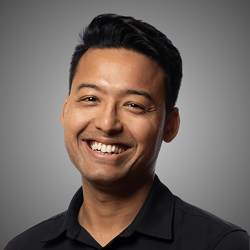
Ankur Shrestha is the founder of XEO.works, a cross-engine optimization agency for B2B SaaS companies in fintech, healthtech, and other regulated verticals. With experience across YMYL industries including financial services compliance (PCI DSS, SOX) and healthcare data governance (HIPAA, HITECH), he builds SEO + AEO content engines that tie content to pipeline — not just traffic.